
A high-altitude glacial collapse along the border between Nepal and China’s Tibet region triggered a catastrophic inland surge, sending a wall of water, mud, ice, and boulder debris racing down narrow river valleys.
A high-altitude glacial collapse along the border between Nepal and China’s Tibet region triggered a catastrophic inland surge, sending a wall of water, mud, ice, and boulder debris racing down narrow river valleys. Authorities have confirmed at least 359 people dead, while more than 1,300 remain missing across the impacted mountain zones.
Search teams from both nations are attempting to reach survivors cut off in rugged terrain where critical infrastructure has been decimated.
Wall of Sludge Levels Border Towns
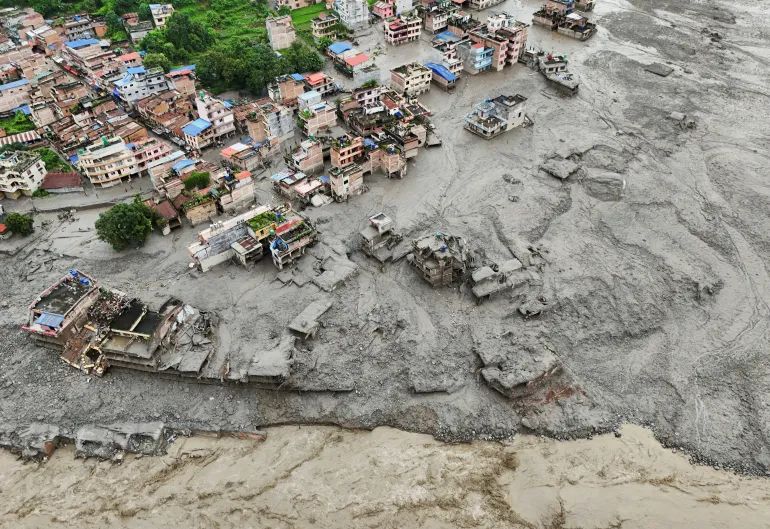
The disaster struck early Wednesday morning after a massive ice-and-rock avalanche collapsed near the Lhende River on the Tibetan side of the border. The debris temporarily blocked the river before breaching, sending a torrent south into Nepal’s Rasuwa district.
Downstream water levels in the Bhote Koshi and Trishuli rivers rose by several meters in minutes. Surveillance video captured multi-story mud surges engulfing structures as residents fled.
- Infrastructure Destroyed: Land-border crossings—including the Gyirong Port facility—were flattened. Custom houses, immigration centers, and border checkposts were wiped out.
- Power Grid Impacted: The flash flood battered hydroelectric project sites downstream, taking roughly 360 megawatts of generation offline in Nepal.
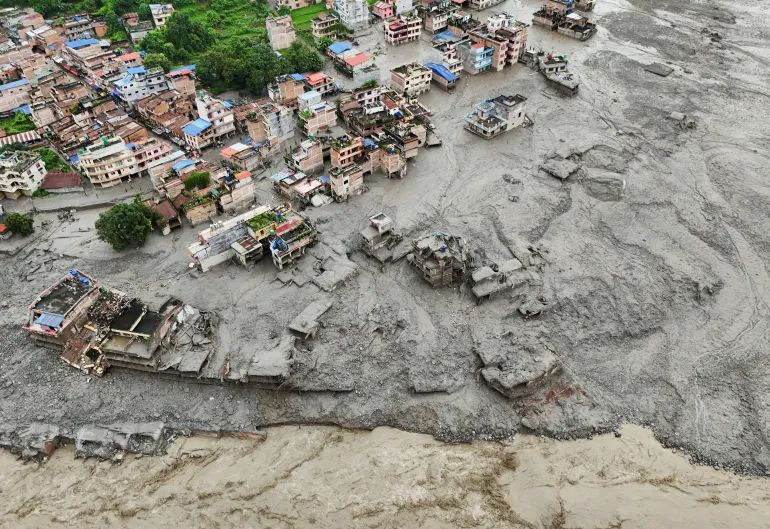
- Widespread Destruction: Communities such as Timure, Syapru Besi, and settlements in the Rasuwa, Nuwakot, and Dhading districts suffered extensive devastation. Floodwaters carried wreckage and bodies over 100 kilometers downstream.
Rescue Bottlenecks & Missing Foreigners
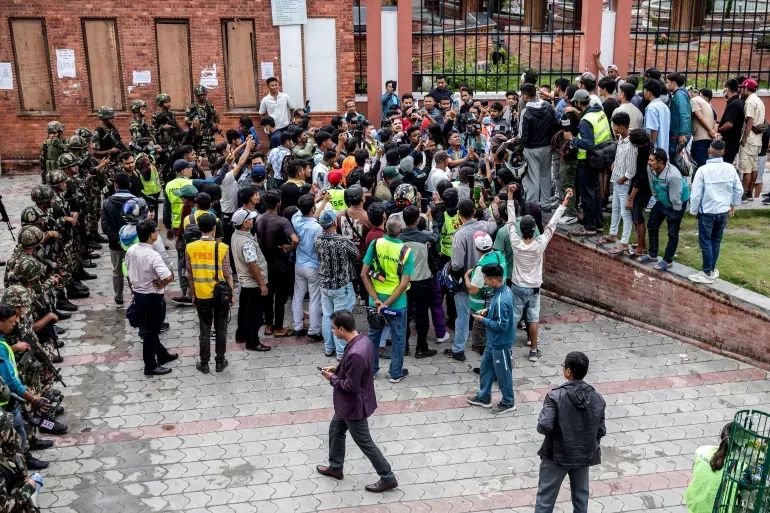
Emergency teams—including military units, police, and local rescue crews—face immense logistics hurdles due to severed supply lines:
- Roads Cut Off: Nepalese disaster officials report that at least 35 motorable bridges, 45 footbridges, and roughly 40 kilometers (25 miles) of mountain roads were destroyed or buried under deep sludge.
- Aerial Relief: Helicopters and military transport aircraft are dropping medical supplies, body bags, and provisions, while attempting air evacuations where landings are possible.
- Foreigners & Pilgrims Missing: Among the hundreds unaccounted for are scores of foreign tourists and religious pilgrims. Many were returning from visits to sacred sites, such as Mount Kailash in Tibet, when the surges struck border facilities.
Glacial Collapse Trigger Identified
Initial reports misidentified the initial shockwave as a minor earthquake. However, the United States Geological Survey (USGS) clarified that seismic readings were caused by the kinetic impact of the collapsing glacier and the massive debris flow.
While geologists continue to study the site, scientists highlight that warming global temperatures are destabilizing high-altitude ice masses across the fragile Himalayan ecosystem. Emergency personnel are monitoring debris dams further upstream to guard against secondary outburst floods.









.jpeg?w=3840&q=75)