
Iran says it launched ‘heavy’ ballistic missile attack on US-linked bases in Jordan after deadly strikes
# US IRANIran’s Islamic Revolutionary Guard Corps (IRGC) says it has launched what it described as a “heavy” ballistic missile attack against Prince Hassan Airbase and a US Marine base in Jordan, portraying the strikes as retaliation for earlier US attacks that Iranian authorities say killed civilians.
Iran’s Islamic Revolutionary Guard Corps (IRGC) says it has launched what it described as a “heavy” ballistic missile attack against Prince Hassan Airbase and a US Marine base in Jordan, portraying the strikes as retaliation for earlier US attacks that Iranian authorities say killed civilians.
The reported escalation comes amid a rapidly widening confrontation between Iran, the United States and their regional allies, with attacks and air-defence operations being reported across the Gulf and surrounding region.
Iranian authorities have framed the latest missile operation as a response to the September 1 US strikes on Iranian targets, which Washington said were carried out after attempted Iranian attacks involving commercial shipping and US service members.
Khamenei warns of further retaliation
Iran’s Supreme Leader Mojtaba Khamenei issued his first message since the latest round of US-Iranian hostilities resumed, warning that Iran’s armed forces have “unforgettable lessons” in store for Washington.
The statement signals that Tehran does not consider the confrontation over and suggests that further military action could follow the latest exchange.
The IRGC's reported missile attack on Jordan would also represent a significant geographic expansion of the conflict, given Jordan's position as a key US security partner in the region and its proximity to Israel, Iraq and Syria.
US says it struck Iranian targets
US Central Command (CENTCOM) said its forces completed a new wave of strikes against Iranian targets on September 1.
Washington said the operation followed what it described as attempted Iranian attacks against commercial shipping and American service members.
The US strikes reportedly targeted locations connected to Iran's military capabilities. Tehran, however, has described the broader US military campaign as an attack on Iran and says civilians have been among those killed.
The competing accounts underline the increasingly dangerous cycle of attack and retaliation, with both sides presenting their military actions as defensive responses to attacks by the other.
Civilian casualties reported in southern Iran
Iranian state media reported explosions at several locations across the country's south, including Asaluyeh, Jiroft, Bandar Abbas, Qeshm Island, Konarak, Chabahar, Jask, Sirik and Lavan.
The Iranian Red Crescent said the attack in Sirik struck a home during a wedding celebration, killing at least four people, including a child, and injuring more than 50 others.
The reported incident has become a central part of Tehran's argument that the US strikes have caused significant civilian harm.
The scale of the casualties could not independently be established from the information available, and casualty figures may change as rescue teams continue searching affected areas and authorities assess the damage.
Gulf states report drone attacks
The latest escalation has also affected neighbouring Gulf states.
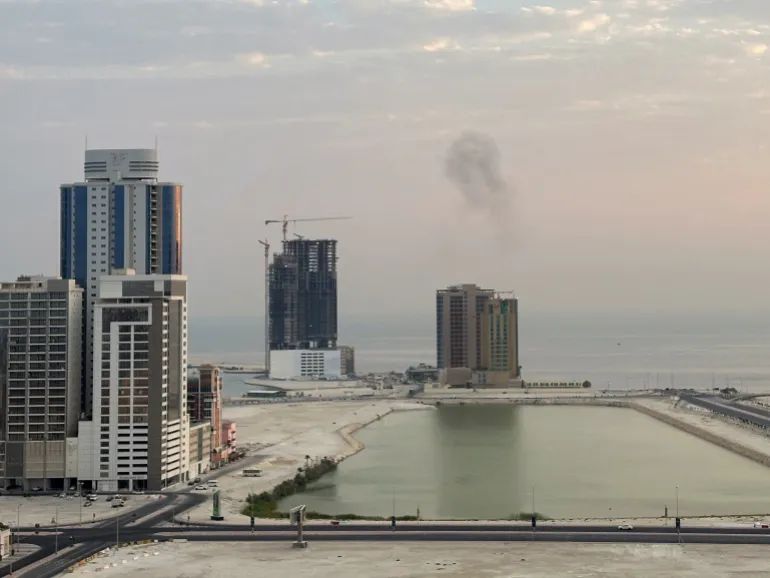
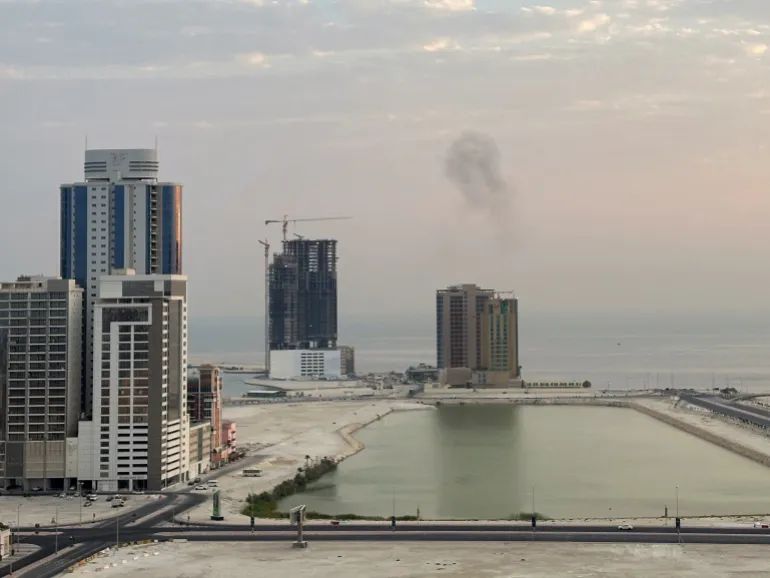
Kuwait said its air-defence systems were actively responding to drone attacks, while Bahrain said its air-defence systems successfully intercepted and destroyed incoming Iranian drones.
The reports highlight the growing threat to countries hosting US military forces or supporting Washington's regional security architecture.
Both Kuwait and Bahrain have close defence relationships with the United States. Bahrain is also home to the US Navy's Fifth Fleet, making the country strategically important to American military operations across the Gulf.
A widening regional confrontation
The reported Iranian missile strike against facilities in Jordan, together with drone activity over Gulf states, points to a conflict increasingly extending beyond direct US-Iranian exchanges.
Military facilities, shipping routes and airspace across the region are now potentially exposed to attacks or interception operations.
The Strait of Hormuz, one of the world's most strategically important energy corridors, remains particularly sensitive. Any sustained military confrontation affecting commercial shipping through the Gulf could have consequences well beyond the immediate battlefield, potentially disrupting energy supplies and increasing global oil-market volatility.
For Washington, the priority remains protecting American personnel and commercial shipping while maintaining its military presence in the region. For Tehran, the stated objective is to impose costs on the United States and its allies in response to attacks on Iranian territory.
The danger is that each new strike could trigger another round of retaliation, making the conflict progressively harder to contain.
What happens next
The latest developments leave the region facing several major uncertainties: whether Iran will conduct additional ballistic-missile or drone attacks, whether the United States will launch further strikes against Iranian targets, and whether countries such as Jordan, Kuwait and Bahrain will become more directly involved in the conflict.
The reported civilian deaths in Sirik could further intensify Iran's determination to retaliate, while attacks affecting US personnel or commercial shipping could prompt Washington to expand its military response.
With both sides describing their actions as retaliation or self-defence, the immediate risk is a broader regional escalation involving US bases, allied states, military infrastructure and commercial shipping.
The situation remains fluid, and casualty figures, damage assessments and details of the reported attacks are likely to develop as authorities release further information.









-Getty-Images_CNT-UK_Sophie-Knight.jpeg?w=3840&q=75)
.jpeg?w=3840&q=75)