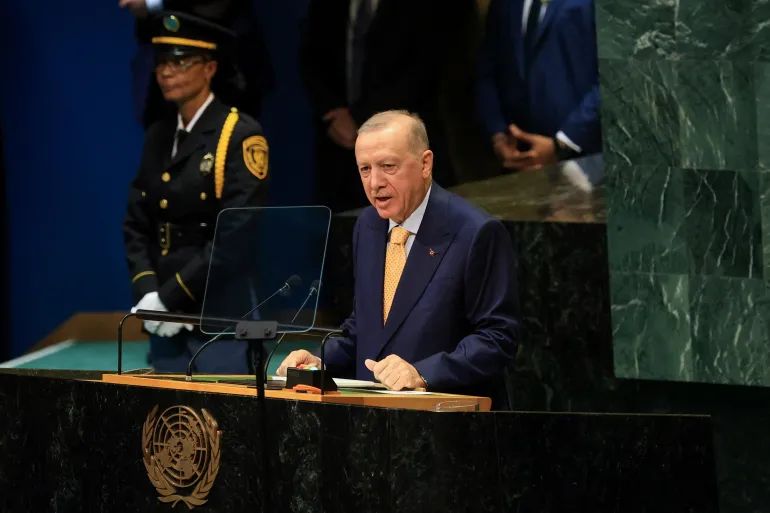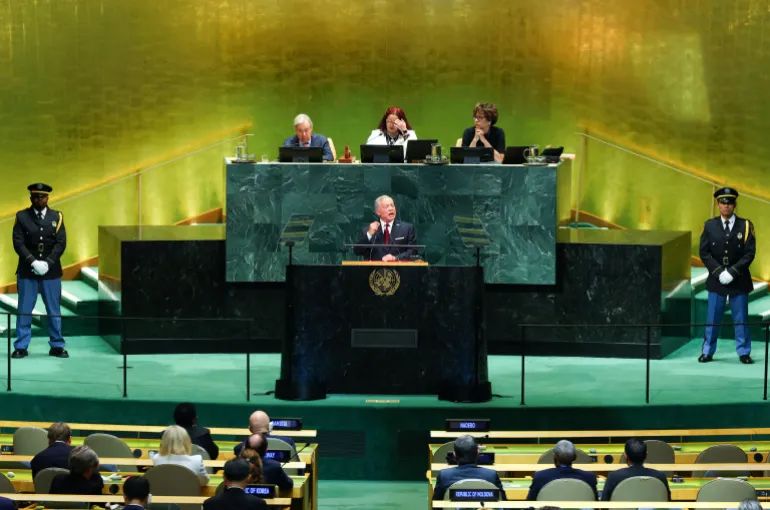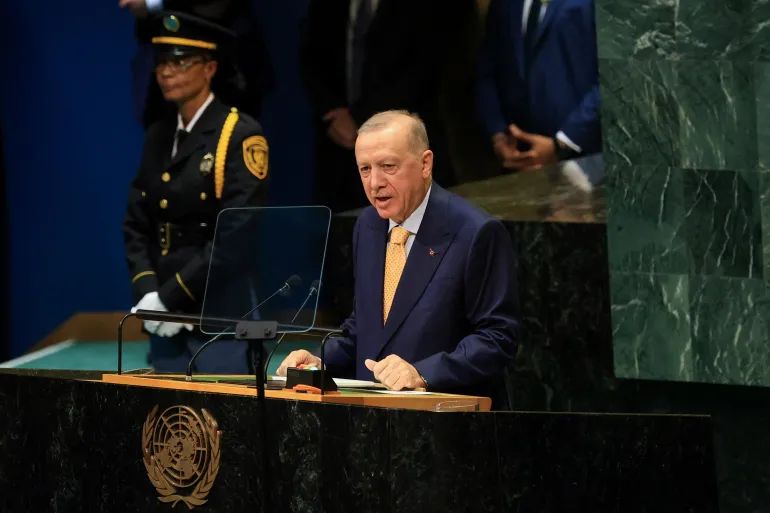

NEW YORK, September 22, 2026: Turkish President Recep Tayyip Erdoğan has used his address to the 81st United Nations General Assembly to highlight the continuing humanitarian consequences of the war in Gaza, saying families are still searching for relatives whose bodies remain buried beneath destroyed buildings.
Addressing world leaders at the UN headquarters in New York on Tuesday, Erdoğan said that tens of thousands of Palestinians had been killed in Gaza during the conflict and described what Türkiye regards as Israel’s military actions as “state terror.”
“The people of Gaza are still searching for their loved ones under the rubble,” Erdoğan said, according to remarks reported from his address. He said families were recovering the bodies of spouses, children and parents.
Erdoğan's remarks come as Palestinian rescue teams continue to recover human remains from buildings destroyed during the war that began after Hamas's October 7, 2023 attack on Israel.
Families still waiting for answers
The issue of people missing beneath the rubble has remained one of the most painful consequences of the destruction in Gaza.
The UN human rights chief, Volker Türk, said earlier this month that Palestinian Civil Defence teams had recovered more than 630 bodies and human remains from beneath destroyed buildings between November 2025 and September 2026. Palestinian authorities estimate that more than 8,000 people remain missing under the rubble.
The UN said some of the remains appear to belong to entire families whose homes were destroyed during Israeli attacks. In one location in the Az Zeitoun area southeast of Gaza City, rescue teams reported recovering 96 bodies and human remains, including 58 children and 23 women. Much of the recovery work was reportedly carried out by hand because of the lack of heavy equipment.
Türk warned that the remains recovered so far could represent only a fraction of those still buried beneath Gaza's destroyed neighbourhoods.
He also called for international investigators to be granted access to all parts of Gaza to help document and preserve evidence.
UN raises concerns over possible violations
The continuing discovery of bodies has also renewed international scrutiny of the conduct of the war.
The UN Office of the High Commissioner for Human Rights said the recovery of extensive human remains had raised serious concerns about compliance with international humanitarian law and the possibility that serious violations, including war crimes, may have occurred.
The UN has previously raised concerns over Israeli attacks involving heavy explosive weapons in densely populated areas, particularly where residential buildings were destroyed and large numbers of civilians were killed.
Israel has rejected allegations that its military deliberately targets civilians and says its operations are directed against Hamas.
More than 73,000 Palestinians reported killed
The death toll has continued to rise even after the major phase of the war and the subsequent ceasefire arrangements.
Reuters reported last week that more than 73,000 Palestinians had been killed in Gaza since Israel launched its military campaign following the October 2023 Hamas attack, citing Gaza health officials. The figures include both civilians and combatants.
Erdoğan cited a higher figure of at least 74,000 deaths in his UN address, describing the scale of the Palestinian casualties as a consequence of what Türkiye considers Israeli state terror.
The conflict was triggered by the October 7, 2023 attack by Hamas and other Palestinian armed groups in southern Israel, in which about 1,200 people were killed and 251 people were taken hostage, according to Israeli figures. Israel subsequently launched a large-scale military campaign in Gaza.
Gaza's destruction complicates recovery
The recovery of bodies is taking place amid enormous physical destruction across the Gaza Strip.
UN humanitarian officials said in September that more than 60 million metric tonnes of rubble remained to be removed from Gaza. UN agencies have cleared more than one million tonnes since last year, but the scale of destruction, unexploded ordnance and shortages of heavy machinery continue to make the process extremely difficult.
UN officials have also said that Israel has restricted the entry of some heavy equipment needed for large-scale rubble removal. The issue has become particularly important because thousands of people are believed to remain buried beneath destroyed structures.
The continuing danger was highlighted last week when a heavily damaged residential building in Gaza collapsed, killing at least 21 people and injuring or rescuing dozens of others. Many displaced Palestinians have been forced to live in damaged buildings or overcrowded shelters because safer accommodation remains severely limited.
Erdoğan also condemns West Bank settler violence
In his UN appearance, Erdoğan also addressed the situation in the occupied West Bank, condemning what he described as “terror” carried out by Israeli settlers.
He said the West Bank was experiencing an extremely serious period of violence and accused Israeli settlers of attacks against Palestinians. He also raised restrictions affecting access to Muslim and Christian holy sites in Jerusalem.
UN humanitarian data shows that settler violence has increased in 2026. Between January and August, OCHA documented more than 1,600 settler attacks that resulted in Palestinian casualties or property damage across 275 communities — an average of 6.7 incidents a day.
The UN also reported that more than 4,000 Palestinians had been displaced in the West Bank during 2026 because of demolitions, evictions, settler attacks and related access restrictions.
Erdoğan criticises absence of Abbas
Erdoğan also expressed concern over the absence of Palestinian Authority President Mahmoud Abbas from this year's General Assembly.
Abbas was unable to travel to New York after the United States rejected his visa application, according to reports referenced during the UN proceedings. Erdoğan described the situation as an injustice to Palestinians.
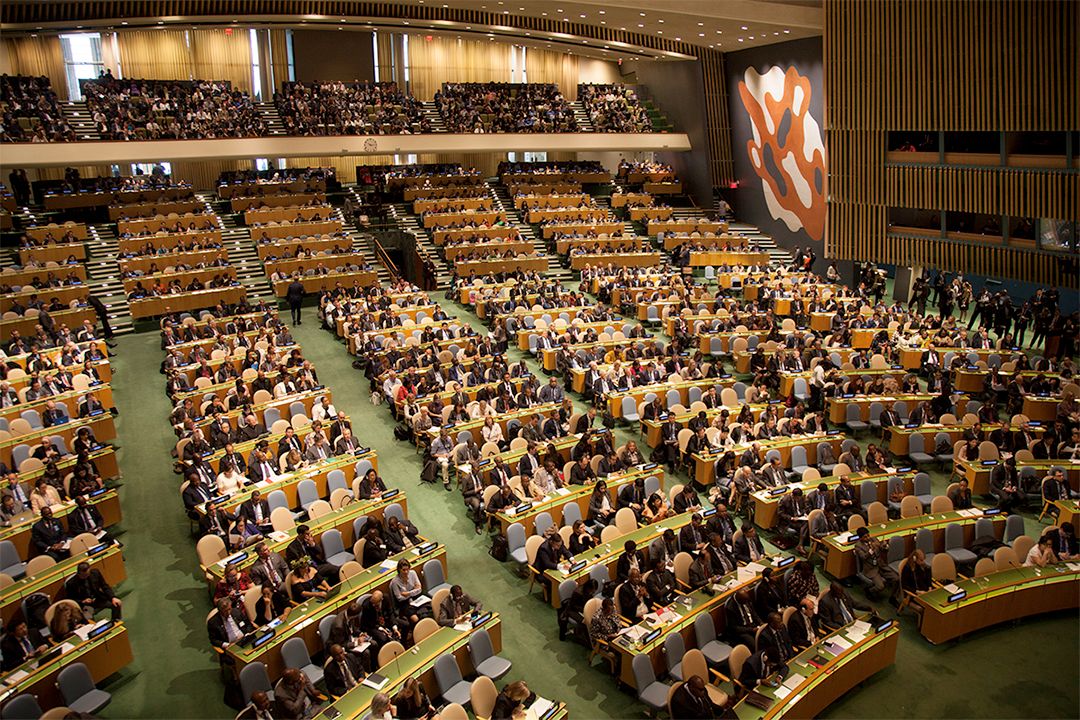
The Turkish president's address comes as Gaza remains one of the central issues at the 81st UN General Assembly, with world leaders facing continued pressure to address civilian casualties, humanitarian access, reconstruction, the status of the Palestinian territories and the prospects for a lasting political settlement.
The UN says the recovery of the dead is not only a humanitarian responsibility but also important for families seeking to establish what happened to missing relatives. Türk has stressed that identifying and burying victims must go together with preserving evidence and investigating the circumstances of their deaths