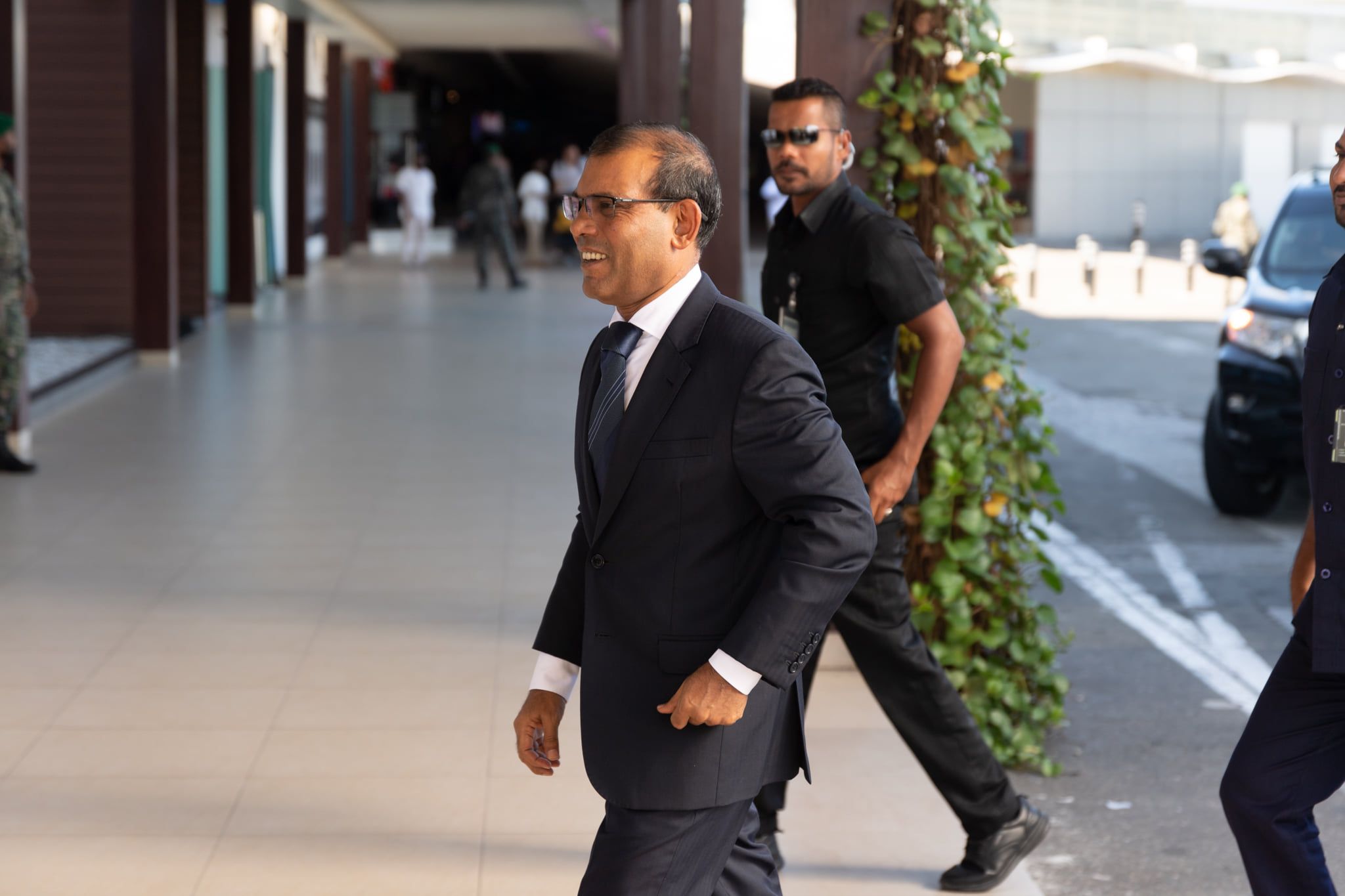
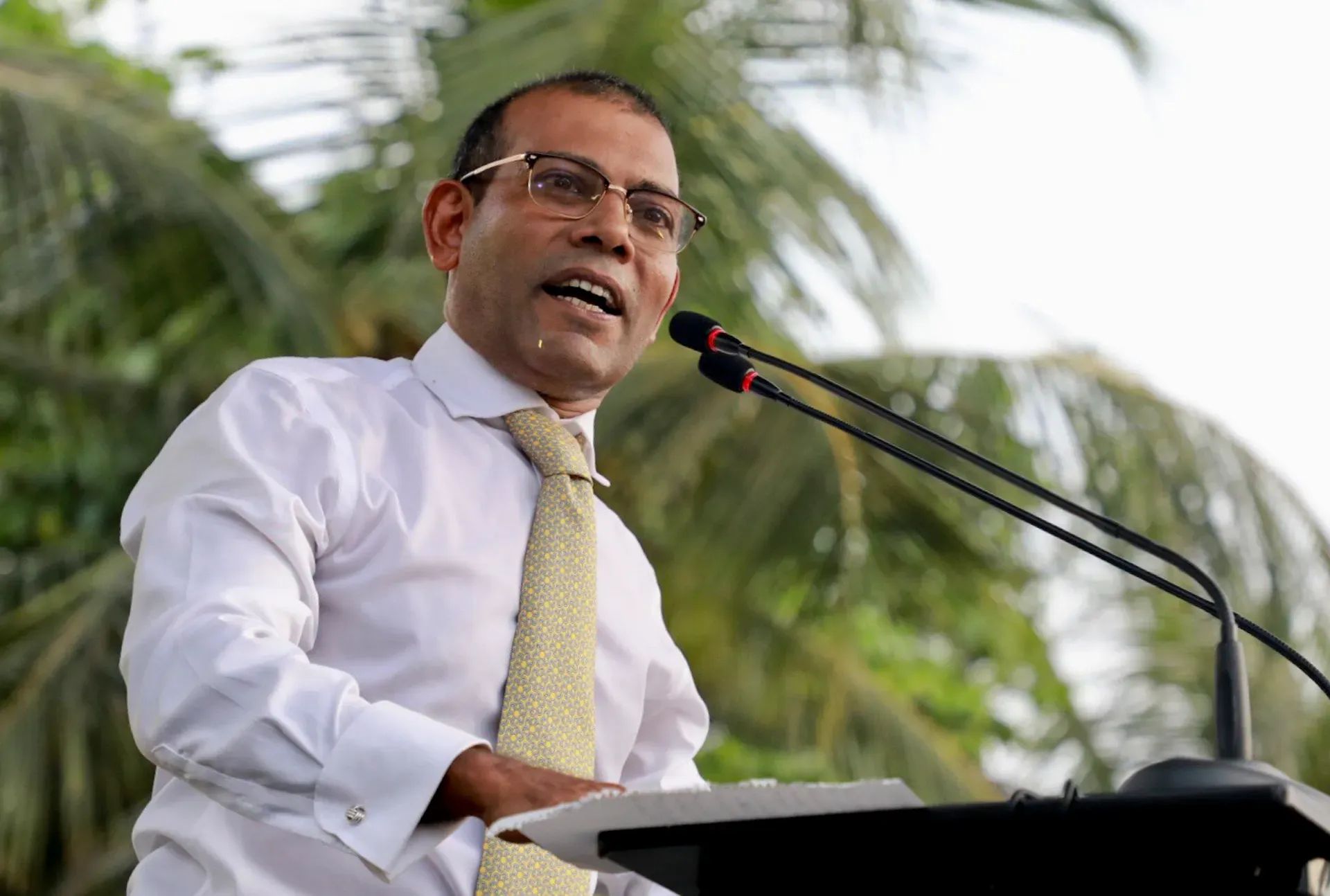
Former President Mohamed Nasheed has defended foreign investment as an important driver of economic growth, arguing that attracting international investors strengthens a nation's independence rather than undermining its sovereignty.
His remarks come amid growing political debate over the government's proposed USD 12 billion Maldives Waterfront and Marina project in Rasmalé, which has drawn criticism from figures within the opposition Maldivian Democratic Party (MDP).
In a post shared on social media platform X, Nasheed, who also serves as the MDP Chairperson, challenged the perception that allowing foreign companies to invest in major development projects could threaten a country's independence.
Instead, he argued that foreign direct investment can help countries build stronger economies, expand their productive capacity and become more resilient to external economic pressures.
Nasheed pointed to the development experiences of countries that gained independence from colonial rule, observing that many of those which subsequently achieved significant economic progress had embraced international investment and used it to create new opportunities.
According to Nasheed, the key consideration is not simply whether a country welcomes foreign investors, but how effectively those investments contribute to long-term national development.
He stressed that foreign investment should go beyond the extraction and export of natural resources. Such investments, he argued, should support industries that transform available resources into higher-value products, introduce new economic activities and improve productivity.
This approach, he suggested, would allow developing countries to generate greater economic benefits while strengthening their ability to compete internationally.
Singapore and South Korea Cited as Examples
Supporting his argument, Nasheed highlighted Singapore and South Korea as examples of countries that have benefited significantly from international investment without compromising their sovereignty.
Both countries underwent major economic transformations over several decades, developing globally competitive industries and establishing themselves as important participants in international trade and investment.
Singapore emerged as a major international financial, logistics and commercial hub, while South Korea developed into one of the world's leading industrial and technological economies.
Although their economic success involved several factors, including government policies, education, infrastructure development and industrial strategies, foreign investment played an important role in supporting their growth.
Nasheed argued that international investment had not weakened either country's independence. Rather, he said, their growing economic strength had improved their ability to safeguard national interests and increased their influence on the global stage.
His comments reflect the broader argument that economic independence is not necessarily achieved by limiting foreign participation, but by building a productive and diversified economy capable of sustaining itself.
Rasmalé Mega Project at the Centre of Political Debate
Nasheed's latest remarks come as the proposed Maldives Waterfront and Marina development in Rasmalé continues to generate political discussion.
The USD 12 billion project, planned in partnership with UAE-based property development company Eagle Hills, has been presented as a major investment initiative with the potential to transform the country's waterfront development and real estate sectors.
Given the scale of the proposed investment, the project has also raised questions about its long-term economic implications, development arrangements and potential benefits to the Maldivian economy.
Large foreign-funded developments can create opportunities for employment, infrastructure expansion, tourism-related businesses and other commercial activities. However, the extent of these benefits depends on factors such as financing arrangements, regulatory oversight, local participation and the terms agreed between the government and investors.
While some within the opposition MDP have expressed criticism of the Rasmalé development, Nasheed has taken a noticeably different position, publicly welcoming the initiative.
His stance has highlighted differing views within the party over how the Maldives should approach major international investments, particularly projects involving foreign developers and substantial financial commitments.
Nasheed Warns MDP Against Opposing Major Investors
Nasheed's support for the Rasmalé project is not new.
Soon after the development was announced, he welcomed the proposal, describing the idea of establishing a waterfront development as a positive initiative.
He has also cautioned members of the MDP National Council against adopting a political position that could be interpreted as opposition to foreign investment.
Nasheed previously warned that openly campaigning against major international investors could damage the MDP politically and undermine confidence in the party's approach to economic development.
In particular, he urged party members to avoid statements targeting prominent investors such as Eagle Hills or countries with significant investment relationships with the Maldives, including the United Arab Emirates.
His position suggests that, despite political differences with the current administration, he believes major investment proposals should be assessed on their economic merits rather than rejected solely because they are being pursued by a political rival.
Foreign Investment and Economic Sovereignty
The debate surrounding the Rasmalé project also raises broader questions about the role of foreign capital in the Maldives' future development.
As a small island economy heavily dependent on tourism, imports and external markets, the Maldives faces significant challenges in diversifying economic activity and creating sustainable sources of revenue.
Foreign direct investment can provide access to financing, technical expertise, international business networks and development opportunities that may otherwise be difficult to secure domestically.
At the same time, large-scale investments require careful scrutiny to ensure that public assets, environmental interests and national economic priorities are adequately protected.
Transparent agreements, appropriate regulatory safeguards, employment opportunities for Maldivians and meaningful participation by local businesses are among the factors that can determine whether such projects deliver lasting benefits.
Nasheed's latest intervention places emphasis on the potential advantages of foreign investment, particularly its ability to strengthen the economic foundations on which national independence depends.
While debate continues within the MDP over the Rasmalé development, his remarks underline a clear distinction between opposing a particular project's terms and rejecting foreign investment as a broader economic policy.
For Nasheed, the central argument remains that a country's sovereignty is better protected through economic strength, productive industries and international competitiveness than through restricting investment opportunities.