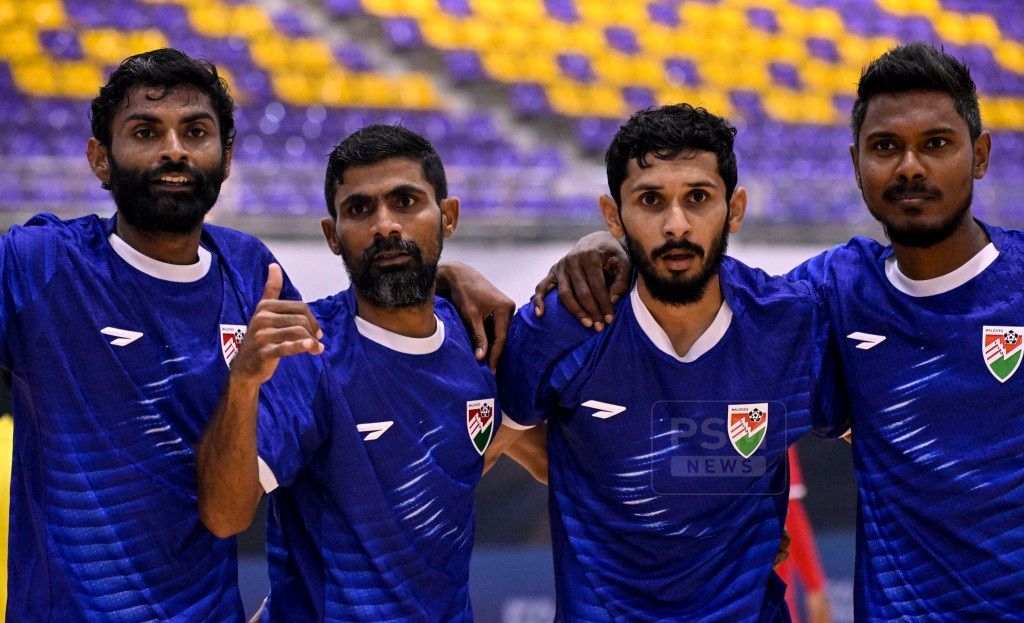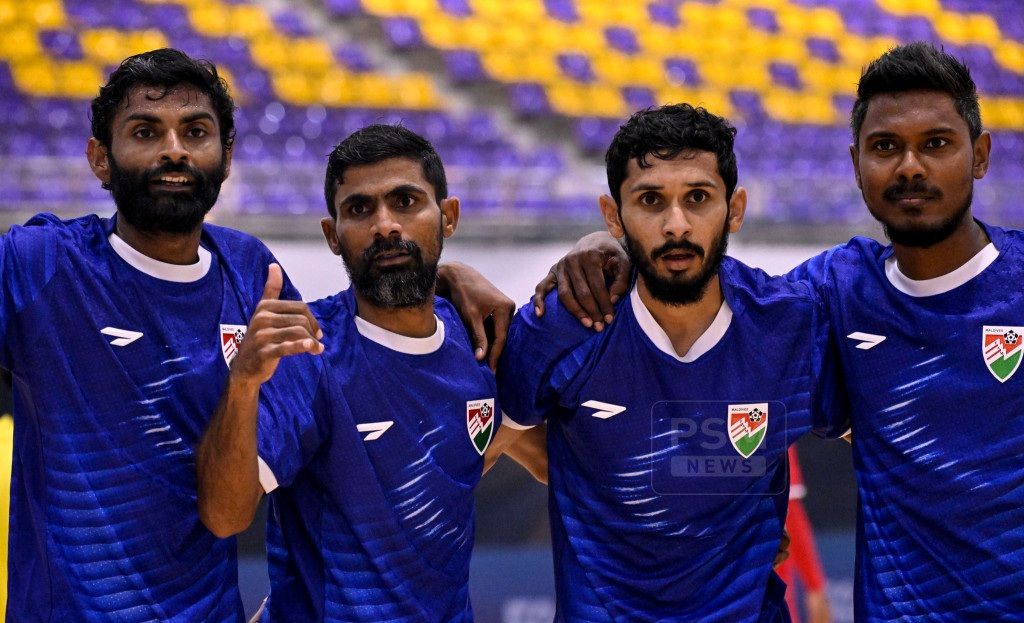

Maldives' 7–0 Statement Against Hong Kong Raises a Bigger Question: Where Is the Home for Maldivian Futsal?
# futsalA dominant victory against Hong Kong has once again demonstrated the potential of the Maldives National Futsal Team. But behind the celebrations lies an uncomfortable reality: the country still lacks a dedicated indoor futsal facility capable of supporting the team's ambitions and long-term development.
The Maldives National Futsal Team delivered an emphatic performance against Hong Kong, securing a stunning 7–0 victory in a result that deserves recognition well beyond the final scoreline.
Seven goals without reply is a powerful statement. It reflects the team's attacking quality, organisation, confidence and ability to impose itself against international opposition. More importantly, the performance has once again brought attention to an issue that Maldivian futsal has struggled with for years: the absence of a dedicated indoor futsal pitch in the country.
There is something particularly significant about the contrast. When Maldivian players get the opportunity to train and compete on proper indoor futsal surfaces, the improvement in their performances becomes increasingly noticeable. Yet, when they return home, they are faced with an environment that does not adequately support the demands of the sport at the level they are expected to compete.
The question is no longer simply whether the Maldives can produce competitive futsal players. Performances such as the 7–0 victory suggest that the country has considerable potential.
The more important question is whether the country's sporting infrastructure is keeping pace with the ambitions of its athletes.
A 7–0 victory that deserves attention
The result against Hong Kong is an achievement that should not be understated.
International futsal is a demanding discipline that requires considerably more than individual technical ability. Players must demonstrate exceptional ball control, quick decision-making, positional awareness, tactical discipline and the ability to operate under constant pressure.
Unlike traditional football, futsal is played in a much smaller area, leaving players with significantly less time and space to make decisions. Every movement matters. Passing angles, defensive rotations, transitions and individual positioning can determine the outcome of a match.
A seven-goal victory therefore provides an opportunity to recognise the collective performance of the Maldivian team.
It also demonstrates why the development of futsal cannot be separated from the environment in which players prepare.
While one result cannot independently establish the team's overall international standing or prove that facilities alone determine performance, it reinforces an important point: Maldivian players have the ability to produce impressive performances when given the opportunity to compete in appropriate conditions.
And that opportunity should not be limited to international tournaments or overseas competitions.
The missing piece: A proper indoor futsal facility
One of the most concerning realities surrounding futsal development in the Maldives is the lack of a dedicated indoor futsal venue.
Futsal is not simply a smaller version of outdoor football. It is a distinct sport with its own playing environment, technical demands and competitive requirements.
The FIFA Futsal Laws of the Game establish specific requirements for playing surfaces and court dimensions. International futsal courts are designed to accommodate the speed, movement and technical nature of the sport.
A suitable indoor facility provides a controlled playing environment where athletes can develop the skills and tactical understanding required for modern futsal.
Without such a facility, national players are forced to depend on whatever training and playing environments are available.
This creates a fundamental disadvantage.
Players preparing for international competitions should ideally have regular access to facilities that reflect the conditions in which they are expected to compete. Training on an appropriate indoor surface allows them to become familiar with ball movement, court dimensions, movement patterns and the pace of the game.
It also allows coaches to implement tactical systems more effectively.
The absence of a dedicated facility is therefore not merely an infrastructure inconvenience. It is a development issue that affects the entire futsal ecosystem.
Why indoor facilities matter in modern futsal
The importance of a proper futsal court extends far beyond providing players with somewhere to play.
1. Technical development
Futsal places enormous emphasis on close control, quick passing, receiving under pressure and decision-making in confined spaces.
Regular access to a suitable indoor court allows players to practise these skills in an environment that closely reflects the demands of international competition.
2. Tactical development
Modern futsal requires sophisticated tactical organisation. Teams must understand defensive formations, pressing systems, rotations, counterattacks and goalkeeper involvement in attacking play.
A consistent training environment gives coaches the opportunity to develop these systems over time rather than adapting their preparations to unsuitable facilities.
3. Physical preparation and player safety
Futsal involves frequent acceleration, deceleration, changes of direction and short bursts of high-intensity movement.
Appropriate playing surfaces and properly maintained facilities are important considerations for athlete safety, particularly when players are training regularly.
4. Consistency in preparation
A national team should not have to depend on occasional access to suitable facilities.
A dedicated venue would provide a consistent training environment, allowing players to prepare throughout the year and maintain continuity between international competitions.
5. Youth development
Perhaps the greatest long-term benefit would be the opportunities created for younger players.
A proper indoor futsal facility could support school competitions, youth leagues, talent identification programmes, coaching courses and regular domestic competitions.
Instead of relying primarily on occasional tournaments, the Maldives could establish a more structured futsal development pathway.
The international standards question
Futsal is governed internationally by FIFA, with continental and regional competitions providing opportunities for national teams to measure their progress against other countries.
For nations aspiring to compete consistently at international level, infrastructure is an important part of the wider sporting development strategy.
Countries that invest in appropriate indoor facilities create opportunities for players to train regularly, coaches to develop tactical systems and younger athletes to enter organised competitions.
A dedicated facility does not automatically produce an international champion. Results also depend on coaching standards, investment in athletes, competitive exposure, sports science, youth development and effective administration.
However, without the appropriate infrastructure, achieving progress in these other areas becomes considerably more difficult.
For the Maldives, a country with a relatively small geographical footprint and limited land availability, infrastructure planning requires careful consideration.
That challenge should encourage innovative solutions, including multipurpose indoor sports halls designed to accommodate futsal and other indoor sports.
It should not become a reason for futsal to remain without an appropriate home.
The responsibility of the authorities
The Maldives has repeatedly demonstrated its passion for sport. Football, futsal and other sporting disciplines attract considerable public interest, and national teams represent the country on international platforms.
However, supporting national athletes requires more than providing team kits, arranging international participation and celebrating victories.
It requires long-term investment in the conditions that allow athletes to improve.
The relevant sports authorities, policymakers and sporting institutions should seriously consider making a dedicated indoor futsal facility a national sporting development priority.
Such a project would not necessarily need to begin with an expensive standalone stadium.
A properly designed indoor sports hall with a regulation futsal court, suitable flooring, adequate lighting, changing facilities, storage and appropriate spectator arrangements could provide a practical starting point.
The facility could also serve multiple purposes, supporting other indoor sporting disciplines and community activities.
More importantly, it would provide the national team with a permanent training base while creating opportunities for domestic futsal development.
The investment should be accompanied by a structured development plan involving regular national competitions, youth programmes, coach education and opportunities for international exposure.
This would transform the project from simply constructing a sports facility into building a sustainable futsal development system.
The players deserve more than occasional opportunities
There is an important distinction between expecting athletes to deliver results and providing them with the resources necessary to achieve those results.
When national players travel overseas and compete on proper indoor futsal courts, they experience the environment in which the sport is designed to be played.
They gain valuable exposure, adapt to the playing conditions and demonstrate what they can achieve.
But these opportunities should be part of a continuous development process, not isolated experiences.
A national team cannot reasonably be expected to maintain international competitiveness if its preparation environment consistently falls short of the standards required at the highest level.
The players are doing their part. They represent the country, put in the work and take on international opponents.
The responsibility now lies with the institutions entrusted with developing sport in the Maldives.
A victory that should become a turning point
The 7–0 victory over Hong Kong should be celebrated.
The players and coaching staff deserve recognition for their performance, and the result should encourage greater public interest in the national futsal programme.
But the victory should also serve as an opportunity to ask difficult questions about the future of the sport.
How many more international competitions must the national team participate in before a dedicated indoor futsal facility becomes a priority?
How much more potential can be unlocked if players have access to appropriate training facilities throughout the year?
And why should a national team representing the Maldives internationally have to depend on opportunities to experience the very facilities that should be available at home?
These are legitimate questions that deserve serious answers.
The absence of an indoor futsal facility is not just a problem for the national team. It is a missed opportunity for young athletes, coaches, schools, local clubs and the future of the sport across the country.
The Maldives has players who can compete, a national team capable of producing impressive results and a sporting community that deserves opportunities to develop.
What is missing is the infrastructure and long-term commitment to bring all these elements together.
A 7–0 victory is worth celebrating. But the bigger victory would be giving Maldivian futsal a permanent home.
The Maldives National Futsal Team has shown what it can achieve.
Now it is time for the authorities to show what they are willing to do for the team.
MALDIVES NATIONAL FUTSAL TEAM DESERVE BETTER!