
Saudi Arabia, Türkiye and Pakistan are preparing to hold urgent talks between their military chiefs as Riyadh faces a new wave of missile and drone attacks linked to Yemen’s Houthi movement. The planned meeting comes under the Mecca Joint Defence Agreement, a trilateral security pact signed by the three countries in August that commits them to treating an attack against one member as an attack against all three.
The announcement followed a meeting in New York between Saudi Foreign Minister Prince Faisal bin Farhan Al Saud, Pakistan’s Deputy Prime Minister and Foreign Minister Mohammad Ishaq Dar, and Türkiye’s Foreign Minister Hakan Fidan. According to the Saudi Press Agency, the ministers agreed that the countries’ military chiefs should hold an urgent meeting to discuss ways of supporting Saudi Arabia under the defence agreement.
Military chiefs to discuss Saudi security
The three countries have not announced a date for the military chiefs’ meeting, nor have they specified what military or defensive assistance could be considered.
The talks are expected to focus on the security situation surrounding Saudi Arabia, particularly the latest attacks originating from Yemen, as well as implementation of the trilateral defence agreement.
The agreement was signed on 7 August 2026 by Turkish President Recep Tayyip Erdoğan, Saudi Crown Prince Mohammed bin Salman and Pakistani Prime Minister Shehbaz Sharif. Its central provision states that an attack against any one of the three countries will be regarded as an attack against all three.
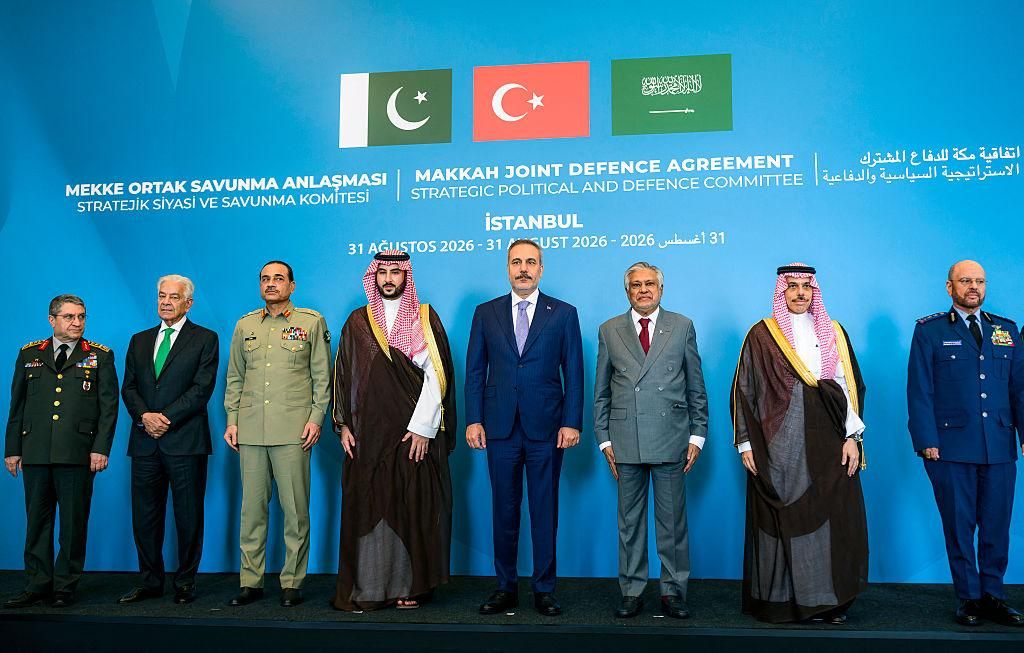
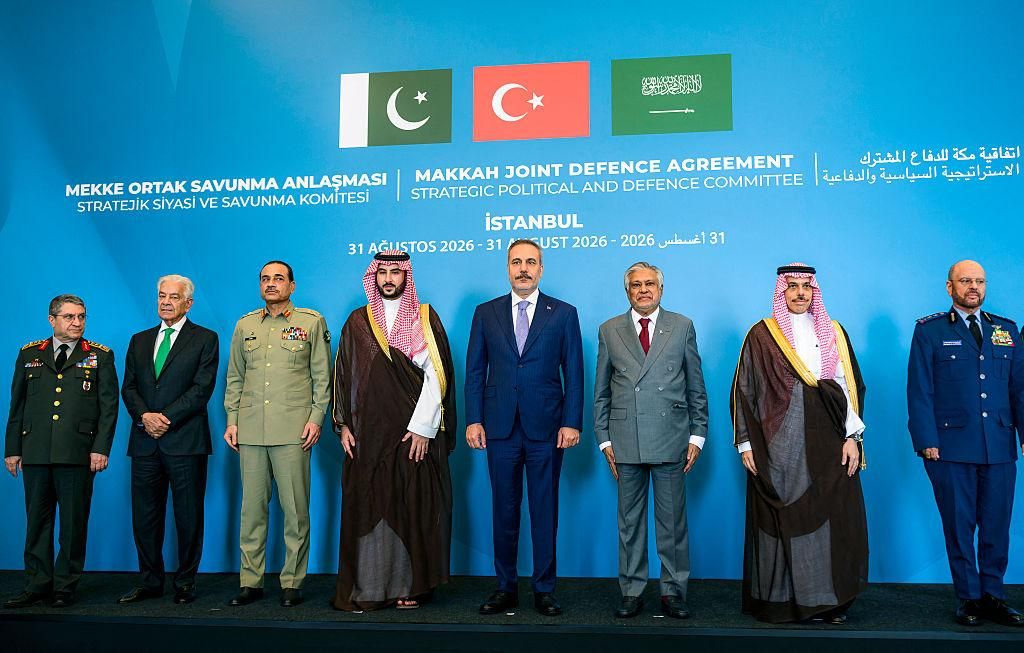
The agreement has since moved into an implementation phase. On August 31, foreign and defence ministers and military chiefs from the three countries met in Istanbul for the first meeting of the Strategic Political and Defence Committee established under the pact. The countries agreed to establish a secretariat in Saudi Arabia and strengthen military cooperation.
New Houthi attacks increase pressure
The latest diplomatic and military consultations come as fighting involving Yemen's Houthi movement has intensified.
Saudi authorities said on Thursday that its air defences intercepted six ballistic missiles launched towards Taif and Yanbu. Saudi coalition spokesman Major-General Turki al-Malki said further escalation by the Houthis would be dealt with firmly.
The Houthis separately claimed that they had launched missile and drone attacks against what they described as a sensitive target in Riyadh and facilities belonging to Saudi oil giant Aramco in Yanbu. Those claims were not independently verified in the reports.
Earlier this month, Houthi forces also claimed attacks against targets in Riyadh. Saudi authorities said an incoming missile had been intercepted, while the escalation has raised concerns about the security of Saudi infrastructure and important maritime routes in and around the Red Sea.
Saudi Arabia invokes its right to defend itself
At the foreign ministers' meeting in New York, Saudi Arabia, Türkiye and Pakistan condemned attacks targeting Mecca, civilian infrastructure and economic facilities in Saudi Arabia.
The three countries also affirmed Saudi Arabia's right to defend itself under Article 51 of the United Nations Charter, which recognises the inherent right of individual and collective self-defence in the event of an armed attack.
The statement did not specify whether the planned military consultations could result in the deployment of forces, air-defence systems or other military assets.
Türkiye and Pakistan already deepening defence cooperation with Saudi Arabia
The planned meeting represents another step in a defence relationship that has developed rapidly since the signing of the Mecca agreement.
During the first Strategic Political and Defence Committee meeting in Istanbul on August 31, Turkish, Pakistani and Saudi officials discussed international security, defence capabilities, interoperability, defence-industry cooperation and counterterrorism.
Pakistan's Chief of Defence Forces and Chief of Army Staff, Field Marshal Syed Asim Munir, also held separate meetings with senior Saudi and Turkish officials during the Istanbul meetings. Discussions included bilateral defence cooperation and the wider regional security environment.
Türkiye's Defence Minister Yaşar Güler also met Pakistan's Defence Minister Khawaja Muhammad Asif and Field Marshal Munir ahead of the trilateral committee meeting. Turkish Chief of General Staff General Selçuk Bayraktaroğlu participated in those discussions.
France also offers defensive assistance
Saudi Arabia's security concerns have also prompted offers of assistance from outside the three-country arrangement.
French President Emmanuel Macron said France would provide defensive military assets to help protect Saudi Arabia's Yanbu area. According to Al Jazeera, Macron said the assistance would include soldiers, radars and defence systems.
The French offer comes as attacks and countermeasures around Yemen, Saudi Arabia and the Red Sea increase concerns over the security of energy infrastructure and maritime trade.
What happens next?
The immediate significance of the planned military chiefs' meeting will depend on what the three governments decide to do under the Mecca Joint Defence Agreement.
For now, the governments have not publicly announced a specific military deployment or operational response. The meeting is intended to discuss ways of supporting Saudi Arabia, but the precise nature of that support remains unclear.
The planned talks nevertheless mark an important development in the newly established trilateral defence framework. The agreement has moved from a political commitment signed in August to formal mechanisms involving foreign ministers, defence ministers and military chiefs, while the latest escalation in Yemen is putting that framework under its first major security test.
The situation also carries wider regional implications because Saudi Arabia's western and southern security environment is connected to major Red Sea shipping routes and energy infrastructure. Further escalation could therefore affect not only the three countries but also regional security and international commercial activity.