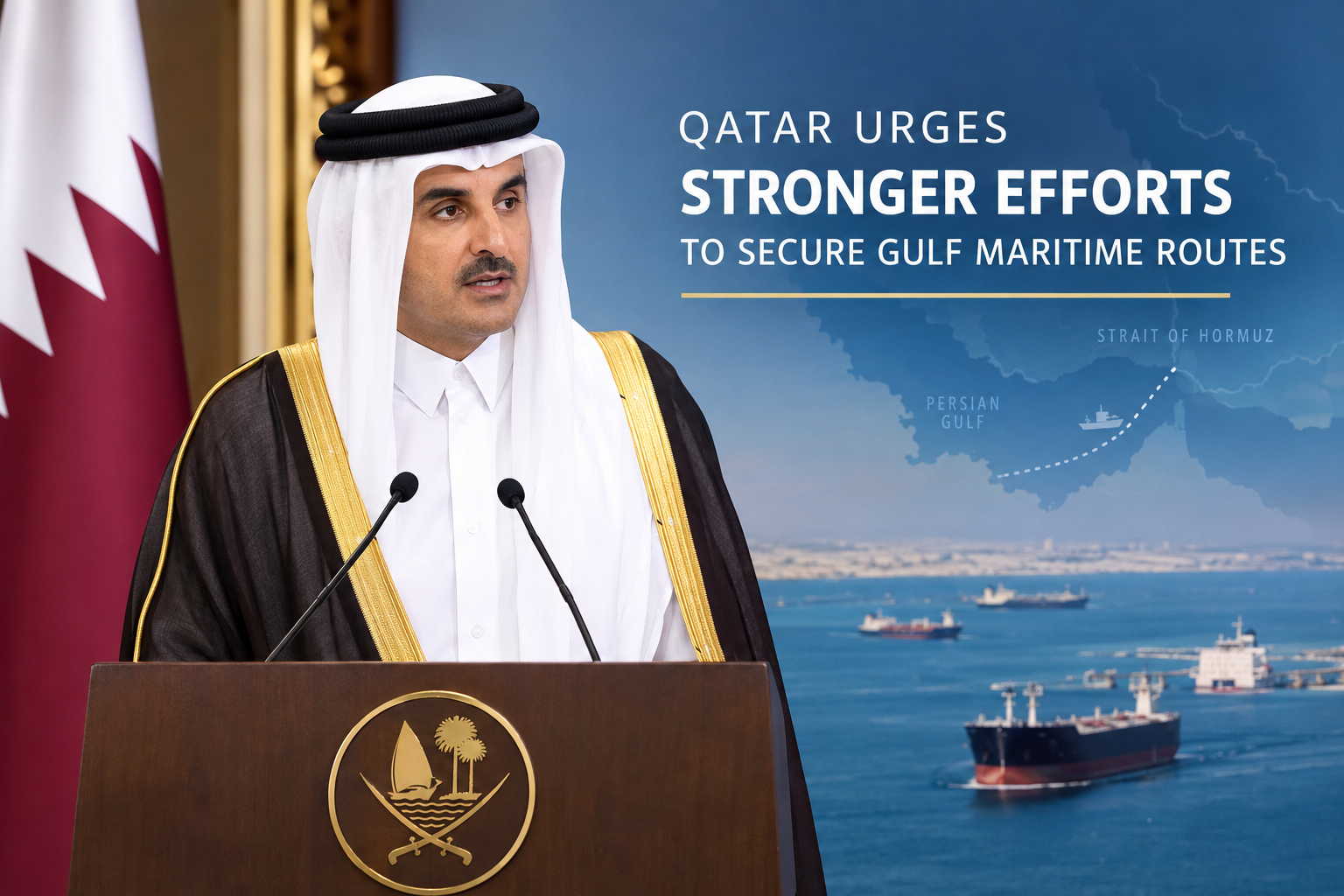

In his address, Sheikh Tamim said Qatar had been managing several responsibilities simultaneously: defending its sovereignty, maintaining energy security and economic activity, and keeping diplomatic channels open to help resolve the conflict.
Qatar is a major global supplier of liquefied natural gas (LNG), accounting for approximately one-fifth of worldwide LNG trade, according to the Emir. He warned that disruptions affecting the country’s energy exports could quickly affect international markets and consumers.
The closure of the Strait of Hormuz, combined with damage to energy facilities in Ras Laffan Industrial City, has disrupted a significant portion of Qatar’s exports. The government has responded by diversifying supply routes, securing essential goods and maintaining strategic reserves.
The Emir said Qatar remained committed to diplomacy while also maintaining its right to defend its sovereignty. He stressed that pursuing peaceful solutions did not mean neglecting national security. <escape> </escape>
Strait of Hormuz remains a major concern
The Strait of Hormuz, which connects the Persian Gulf to the Gulf of Oman and the Arabian Sea, is one of the world's most important maritime chokepoints. It is a key route for international oil and LNG shipments, making uninterrupted navigation essential to global energy markets.
Tensions surrounding the waterway have intensified amid the conflict involving Iran and the United States. Reuters reported on October 8 that tanker operators faced increased risks following attacks on vessels and Iranian warnings that unauthorised shipping routes could be blocked. A chemical tanker was also struck by projectiles off Qatar, according to maritime security sources cited by Reuters. <escape> </escape>
Qatar has repeatedly argued that restoring safe navigation should be pursued through diplomatic engagement rather than allowing maritime access to remain dependent on unresolved political disputes.
In September, Qatari officials also advocated applying international maritime law and developing practical mechanisms to restore navigation quickly if a strategic waterway is closed or seriously disrupted.
Regional security and international trade
The Emir’s latest appeal comes as regional hostilities threaten to widen beyond individual conflict zones. On Tuesday, the Associated Press reported further developments in the confrontation between Saudi Arabia and Yemen’s Houthi rebels, including Houthi claims of airstrikes in areas under their control and reports of missile activity directed towards Saudi Arabia.
Against this backdrop, Qatar is calling for Gulf countries to strengthen security coordination and protect maritime routes and critical infrastructure from further attacks. <escape> </escape>
The consequences of maritime disruptions extend beyond the Middle East. Interruptions to shipping can increase transportation costs, disrupt supply chains and put pressure on energy prices. Countries that depend on imported fuel, food and other essential commodities may be particularly vulnerable to prolonged disruptions.
Qatar calls for diplomacy alongside stronger security
Qatar’s position combines calls for stronger regional coordination with continued efforts to secure a diplomatic resolution. Doha has supported negotiations aimed at restoring freedom of navigation through the Strait of Hormuz and has urged regional and international partners to work towards a sustainable settlement.
The Emir’s address reinforces Qatar’s message that protecting maritime routes is a shared regional and international responsibility. The immediate challenge remains ensuring safe passage for commercial vessels, protecting energy and civilian infrastructure, and preventing further escalation from undermining regional stability and the global economy.

.jpg?w=3840&q=75)